For years, marijuana investing carried a reputation problem. It sounded risky, controversial, and often misunderstood. Many people assumed that investing in cannabis meant operating in legal gray areas—or worse, illegal ones.
That assumption is no longer true.
Today, you can invest in marijuana legally, transparently, and directly through the stock market. Publicly traded companies, regulated exchanges, and institutional investors have all entered the space. Cannabis investing has moved from the fringe to the financial mainstream.
This article explains how marijuana investing works legally, what options are available on the stock market, the risks involved, and how disciplined investors approach this emerging sector without hype or shortcuts.
The Legal Shift That Changed Everything
The key reason marijuana investing is now possible is regulation.
While marijuana laws still vary by country and region, financial markets operate under a different framework. Many cannabis-related companies are fully legal businesses that comply with:
- Corporate law
- Securities regulations
- Exchange listing requirements
This distinction allows investors to participate legally—without touching the product itself.
You are not buying marijuana.
You are buying shares in companies that operate within regulated markets.
How Marijuana Companies Trade on the Stock Market
Cannabis companies access capital the same way other industries do: by going public.
Once listed, their shares can be bought and sold through:
- Major stock exchanges
- Online brokerage platforms
- Retirement and taxable investment accounts
These companies must meet disclosure standards, report earnings, and comply with financial regulations—just like any other public company.
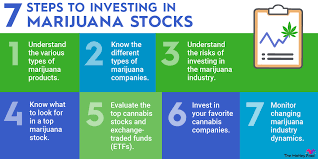
Types of Marijuana Stocks You Can Invest In
Cannabis investing is broader than most people realize. It is not limited to growers alone.
1. Cannabis Producers and Growers
These companies focus on cultivating and selling marijuana products.
They generate revenue from:
- Medical cannabis
- Recreational cannabis
- Wholesale supply agreements
This segment is often the most visible—and the most volatile.
2. Cannabis Retail and Distribution Companies
Some companies specialize in:
- Retail storefronts
- Online distribution
- Regional or national sales networks
These businesses resemble traditional retail operations, with cannabis as the core product.
3. Ancillary Cannabis Businesses
Not all cannabis investments involve the plant itself.
Ancillary companies provide:
- Packaging
- Equipment
- Technology
- Logistics
- Compliance and security services
These businesses often face less regulatory risk while benefiting from industry growth.
4. Pharmaceutical and Biotechnology Firms
Some companies focus on:
- Cannabis-based medicines
- Research and development
- Clinical trials
This segment blends cannabis with traditional healthcare investing and often attracts institutional interest.
Cannabis ETFs: A Simpler Entry Point
For investors who prefer diversification, cannabis-focused exchange-traded funds (ETFs) offer exposure without betting on a single company.
ETFs typically:
- Hold multiple cannabis-related stocks
- Reduce company-specific risk
- Offer liquidity and transparency
This approach appeals to investors who want sector exposure with less volatility.
Why Cannabis Investing Attracts Serious Investors
Cannabis is no longer just a cultural trend. It is an economic one.
Key drivers include:
- Expanding legalization
- Medical adoption
- Consumer demand
- Global market growth
As regulations evolve, revenue potential increases—making the sector attractive to long-term investors willing to manage risk.

Understanding the Risks Before You Invest
Cannabis investing is legal—but not risk-free.
Regulatory Uncertainty
Laws can change. Tax rules can shift. Government policy still plays a major role in shaping the industry.
Market Volatility
Cannabis stocks are known for sharp price swings. Hype cycles and sentiment shifts can move prices faster than fundamentals.
Profitability Challenges
Many cannabis companies prioritize growth over profits. Investors must evaluate balance sheets, not just headlines.
Competition and Oversupply
Rapid expansion has created pricing pressure in some markets. Not all companies will survive.
Legal does not mean guaranteed.
Why Executives and Professionals Approach Cannabis Carefully
High-income and experienced investors tend to treat cannabis as a satellite investment, not a core holding.
They focus on:
- Position sizing
- Risk management
- Long-term trends
- Regulatory awareness
The goal is exposure—not speculation.
The CEO Mindset: Invest in Businesses, Not Narratives
Successful investors separate stories from strategy.
When evaluating cannabis stocks, they ask:
- Does this company generate real revenue?
- Is the business scalable?
- How strong is management?
- Can it survive regulatory shifts?
Emotion-driven investing is expensive—especially in emerging sectors.
How Cannabis Fits Into a Balanced Portfolio
Cannabis investments work best when:
- They represent a small percentage of the portfolio
- They complement, not replace, core assets
- They are reviewed regularly
This approach captures upside while limiting downside.
Common Mistakes New Cannabis Investors Make
- Chasing hype instead of fundamentals
- Overconcentrating in one stock
- Ignoring cash flow and debt
- Assuming legalization equals profits
- Trading emotionally during volatility
Discipline matters more than timing.
Is Cannabis Investing Right for You?
Cannabis investing is not for everyone.
It may suit investors who:
- Understand volatility
- Have a long-term horizon
- Can tolerate regulatory uncertainty
- Already have a diversified portfolio
It is not a shortcut to wealth—but it can be a strategic addition.
Final Thoughts: Legal, Accessible, and Still Demanding Discipline
Yes—you can invest in marijuana legally on the stock market.
But legality does not eliminate risk. It simply creates access.
Cannabis investing rewards patience, research, and restraint. Those who treat it like a business opportunity—not a trend—are far more likely to succeed.
Invest deliberately. Size positions wisely. And remember: in the stock market, discipline always outperforms excitement.
End of article.
Summary:
A few decades ago, research into the medical benefits of marijuana was common, and was funded by both private and public grants. Almost every major university had some program underway for studying the subject
Keywords:
loans
Article Body:
A few decades ago, research into the medical benefits of marijuana was common, and was funded by both private and public grants. Almost every major university had some program underway for studying the subject. But as government began a more aggressive approach to regulating or prohibiting drug use, marijuana research fell by the wayside. Many of the same studies became illegal, and those found to be doing such research faced harsh penalties, including extensive jail time.
But during recent years, scientists and medical doctors � as well as their own patients and groups dedicated to legalizing marijuana for medical use � have made headway, and now marijuana use is officially sanctioned in many jurisdictions. In places like California, for example, it is possible to obtain prescriptions to use it for medical purposes. Many who use this medicinal pot claim that it works well for treatment of chronic pain, treatment of glaucoma, and other maladies. Because of the increase in popularity of marijuana as a medical drug, many companies are hoping to profit from this drug, by growing, distributing, or otherwise providing marijuana to consumers who need it as a prescription medication.
The global healthcare company Bayer � known mostly for its household name aspirin products � for example, recently signed licensing agreements with a small biotech company in the United Kingdom that specializes in efficient deliver of the active ingredient in marijuana. By providing this active chemical component in an aerosol spray, the company hopes to attract those users who are concerned about the bad health effects of smoking pot. Other mega corporations are experimenting with ways to provide medical marijuana on a large scale. If the drug ever becomes legal, they want to be ready to capitalize on the new market and get the jump on their potential competition.
By buying stock in companies that are positioned to benefit from the future of medical marijuana, you can get in on the ground floor of any potential breakthrough in this biotech and healthcare sector. But because the drugs are not yet profitable � at least to those selling them legally � many investors who put money into backing companies that are primarily in the marijuana business may not see earnings for many years, if ever.
A safer bet is to buy into companies that are already profitable by selling prescription medicines. If marijuana research convinces legislators to allow it to be sold like ordinary medicine, these companies will surely get a piece of the action. They may get their market share of the business by packaging and distributing it, by coming up with new medicines based on it or by growing the raw product and converting it into usable prescription medicine. But in the meantime, if you have invested in these companies in order to take advantage of the profits that might come from marijuana, you don�t have to simply sit and wait for the future. By investing in solid, profitable companies, you will benefit immediately. And if the future is bright for medical pot, you�ll be positioned to take full advantage of the new and revolutionary products.


Tinggalkan Balasan